What a Budget Weekend Trip from Singapore to Bangkok Actually Costs
A real all-in cost breakdown of a budget Bangkok weekend trip from Singapore — flights, baggage fees, transfers, accommodation, and the costs most travellers miss.
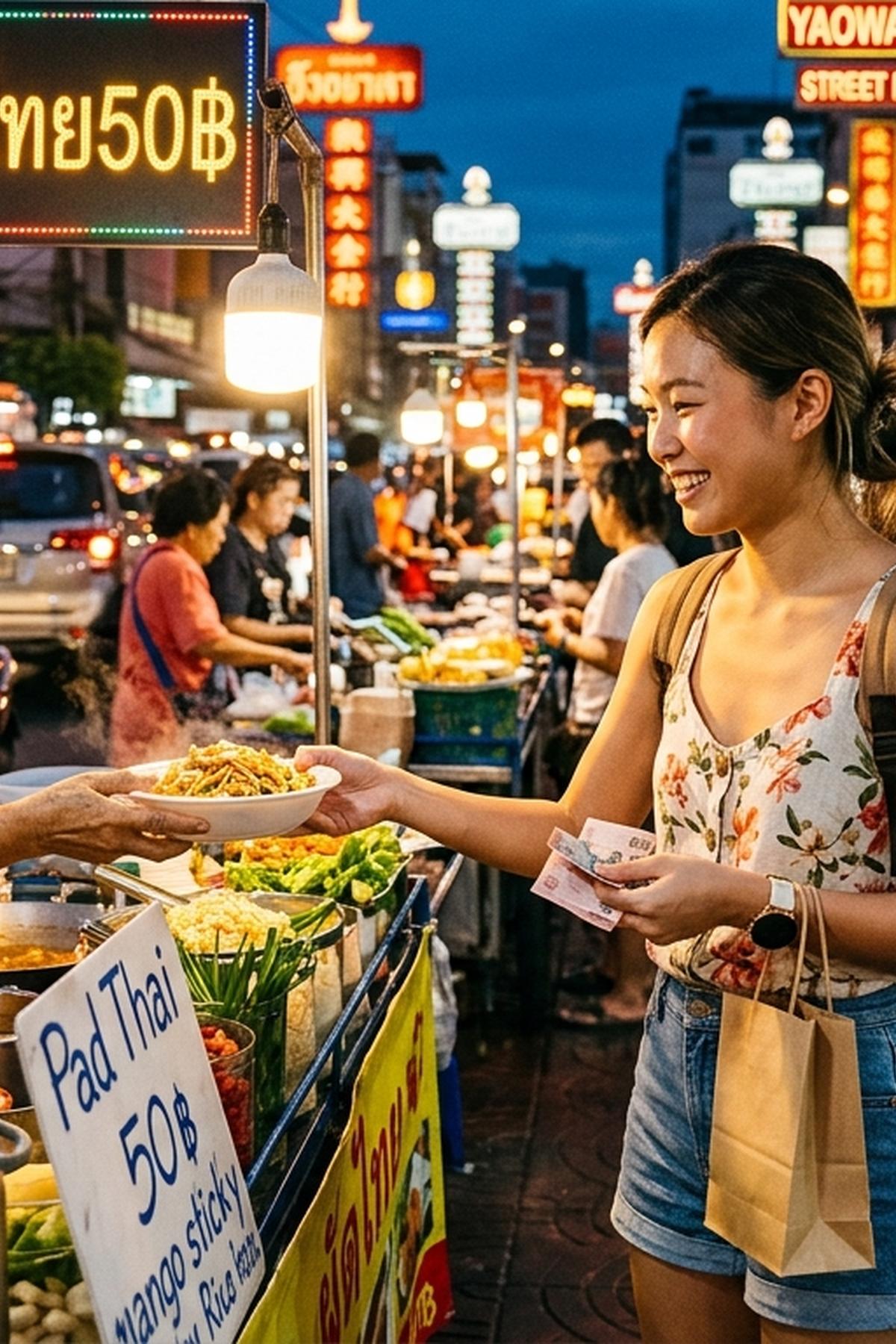
Bangkok sits two hours and twenty minutes from Changi. Close enough to feel like a long weekend, far enough to feel like a proper escape. The city has a well-earned reputation for stretching a dollar further than almost anywhere else in Southeast Asia. But that reputation gets built around street food prices and guesthouse rates, not the full journey. The honest total, from your front door to your hostel check-in, is higher than most people budget for. Here is what it actually looks like, line by line.
Three Things to Know Before You Budget
- LCC airfare with a checked bag and airport taxes typically runs S$120, 180 return, not the S$49 shown in the headline.
- Transfers at Bangkok airports and Changi add S$30, 50 to your total, and more if you fly into Don Mueang.
- Mobile data roaming on a Singapore SIM in Thailand costs S$25, 40 for a weekend and is one of the simplest costs to cut before you fly.
Why the Headline Fare Is Never the Full Price
Low-cost carriers publish base fares designed to catch attention at the search stage. AirAsia and Scoot both fly the Singapore to Bangkok route regularly, and both are capable of showing one-way prices below S$50 during promotional windows. That price assumes you travel with hand carry only, accept a randomly assigned seat, and skip the meal.
Adding a 20kg checked bag changes the picture. Checked baggage on AirAsia or Scoot runs S$25, 40 per leg if added at the time of booking. Leave it to the airport counter and you pay a penalty rate that can double that figure. A preferred seat during peak periods costs another S$8, 20 per leg. Fuel surcharges and airport departure taxes appear at the final checkout page and are non-negotiable additions. A realistic return fare for one person with a standard checked bag lands at S$120, 180.
The single most reliable saving on the whole trip: add the bag at booking. Never at the airport. That one habit can save you S$30, 60 across a return journey.
Don Mueang vs Suvarnabhumi: Which Airport Changes the Transfer Maths
AirAsia flights from Singapore typically land at Don Mueang (DMK), the older of Bangkok's two main international airports. Scoot operates into Suvarnabhumi (BKK), the primary hub. The airport you arrive at shapes your transfer cost and city arrival time more than most travellers realise.
Suvarnabhumi has the Airport Rail Link, which connects directly to Phaya Thai station in the city centre for 45 THB, roughly S$1.75. The journey takes about 30 minutes and runs past midnight. A metered taxi from BKK runs THB 300, 400 (S$11, 15) before expressway tolls. It is comfortable, but the queue at the taxi rank can stretch long during evening arrivals.
Don Mueang has no rail connection. The A1 and A2 bus routes run to Mo Chit and Sanam Luang for 30 THB (S$1.15), but the journey takes 60, 90 minutes in traffic. A metered taxi runs THB 350, 500 (S$13, 19) plus tolls. If you land during peak hour, budget an extra 30, 45 minutes compared to arriving at BKK. This is worth factoring into which fare you choose when both airlines are similarly priced.
The Changi End of the Cost Equation
On the Singapore side, the MRT to Changi Airport is the obvious choice that many travellers still skip in favour of a taxi. From most central MRT stations, the fare to the airport sits at S$1.80, 2.30 on an EZ-Link card. A taxi or ride-hail service costs S$20, 35 depending on the time of day and traffic. The MRT takes 30, 45 minutes from Orchard or City Hall. Check the last train timing if you have an early morning departure.
For the return leg, reverse both ends. Budget S$30, 50 for all four transfer legs combined: home to Changi, Bangkok airport to city, city back to Bangkok airport, and Changi back into Singapore. Lean toward the lower end if you use the Airport Rail Link both ways at Suvarnabhumi. Lean higher if Don Mueang and taxis are involved.
Bangkok Accommodation: What Each Price Tier Looks Like
Bangkok's accommodation range is genuinely wide. Hostel dorm beds in the Khao San Road and Silom areas run THB 300, 500 per night (S$11, 19). A private room in a guesthouse in the same neighbourhoods costs THB 700, 1,200 (S$27, 46). A clean, air-conditioned budget hotel near an elevated rail station costs THB 1,000, 1,500 (S$38, 57) and sometimes includes a small pool.
For a two-night stay, the accommodation cost breaks down roughly as:
- Hostel dorm bed: S$22, 38 for the weekend
- Private guesthouse room: S$54, 92 for the weekend
- Budget hotel near a rail station: S$76, 114 for the weekend
- Mid-range hotel with pool: S$100, 160 for the weekend
The private guesthouse and budget hotel tiers represent the sweet spot for most travellers who want privacy and reliable sleep quality without paying for extras they will not use. A central location near a rail station is worth a small premium because it reduces your Grab and taxi spend for the rest of the trip.
What to Sort Before You Fly
The 24 hours before departure are when avoidable costs either get locked in or eliminated. Work through this before you reach the boarding gate:
- Confirm your baggage add-on. Log into the booking, check the weight allowance, and save or print the confirmation. Airport staff charge significantly more if the add-on does not appear in the system.
- Sort your cash situation. Airport money changers in Bangkok offer poor exchange rates. Bring Singapore dollars to swap at a reputable downtown bureau like Superrich on Ratchadamri Road, or use a local ATM on arrival. Most Thai banks charge a THB 220 foreign transaction fee per withdrawal, so draw larger amounts in fewer transactions.
- Set up mobile data before you board. Roaming on a Singapore postpaid plan in Thailand adds S$25, 40 to your monthly bill for a weekend of moderate use. Before you fly, you can find eSIM plan options for Thailand covering three to five days at a fraction of that cost. Activate the eSIM before departure and data works the moment your flight touches down, no SIM swap or airport counter queue needed.
- Cache your offline maps. Download your Bangkok neighbourhood in Google Maps or Maps.me before you board. Even with mobile data, offline maps load faster in basement malls and narrow lanes with weak signal.
- Set a daily food number. Bangkok street food is one of the most reliable ways to eat well for very little. Pad Thai from a roadside cart costs THB 50, 80 (S$1.90, 3.10). A sit-down meal at a local restaurant runs THB 150, 300 (S$5.80, 11.50). Eating at hawker stalls and local spots keeps your food budget at S$15, 25 per day without any sacrifice on quality.
Getting Around Bangkok and the Costs That Sneak onto the Bill
Within Bangkok, the elevated Skytrain network covers most of the main tourist, dining, and shopping areas. A single journey runs 17, 59 THB depending on distance, and fares by station can be mapped out before you arrive so you know roughly what a day of travel will cost. Two full days of moderate rail use adds roughly THB 200, 300 (S$7.70, 11.50) to the total.
Grab fills the gaps the rail does not cover. Most trips within central Bangkok run THB 50, 150 (S$1.90, 5.80). If you are staying close to a rail station, Grab becomes a supplement rather than the primary mode, which keeps costs down.
Entry fees add another layer. The Grand Palace costs 500 THB (S$19). Wat Pho is 200 THB (S$7.70). If sightseeing is on the agenda, budget S$20, 30 for entry fees across the two days. Bangkok also has a significant number of free temples, public parks, and markets that cost nothing to walk through and are often more interesting than the ticketed sites.
A Realistic All-In Cost Estimate for One Person Over Two Nights
| Cost Category | Low (S$) | High (S$) |
|---|---|---|
| Return airfare (with bag and taxes) | 120 | 180 |
| All airport transfers (both ends) | 30 | 50 |
| Accommodation (2 nights, private room) | 54 | 114 |
| Food and drinks (2 days, eating local) | 30 | 50 |
| City transport (rail and ride-hail) | 15 | 30 |
| Attraction entry fees | 0 | 30 |
| Mobile data (eSIM, 3 to 5 days) | 8 | 15 |
| ATM fees and exchange rate losses | 8 | 15 |
| Estimated Total | 265 | 484 |
Add shopping, a rooftop bar, a traditional Thai massage, or a boat trip along the Chao Phraya, and the upper end stretches further. But even the high estimate here sits well below what a comparable weekend in Tokyo, Hong Kong, or Seoul would cost from Singapore.
The Number You Should Write Down Before You Book the Ticket
The popular framing of Bangkok as a "cheap weekend" is not wrong. It is just incomplete. The city is genuinely affordable, once you understand where the actual costs land. Flights and baggage fees take the largest share, and that share is mostly fixed regardless of how budget-conscious you are on the ground. Accommodation and food cost far less than cities at a comparable distance from Singapore, and getting around is inexpensive if you use the rail network rather than defaulting to ride-hail for every trip.
The rest of the budget fills with small, predictable expenses that are easy to underestimate when attention is fixed on the base fare. Roaming charges, ATM fees, and airport transfers are not large individually, but together they can add S$60, 80 to a trip that already felt fully costed. Most of them are avoidable with five minutes of planning before departure.
A realistic two-night trip from Singapore to Bangkok costs S$265, 484 per person, depending on where you sleep, how you move around, and what you choose to see. That range shifts based on booking timing, airline choice, and a handful of small decisions made in the days before you fly. The travellers who come back saying Bangkok is cheap are almost always the ones who planned the full number before they booked the ticket, not after they read the credit card statement.
Read next
-
 Flights and Full Trip Costs for a Hong Kong Weekend from Singapore
Full cost breakdown for a Hong Kong weekend from Singapore. Flights on Scoot, Jetstar, and Cathay Pacific, plus transport, accommodation, and eSim tips.
Flights and Full Trip Costs for a Hong Kong Weekend from Singapore
Full cost breakdown for a Hong Kong weekend from Singapore. Flights on Scoot, Jetstar, and Cathay Pacific, plus transport, accommodation, and eSim tips.
-
 What to Do If Your Budget Flight from Singapore Gets Delayed
Flight delayed at Changi? Here is the exact sequence, from verifying the delay to claiming compensation and protecting your onward connections.
What to Do If Your Budget Flight from Singapore Gets Delayed
Flight delayed at Changi? Here is the exact sequence, from verifying the delay to claiming compensation and protecting your onward connections.