Singapore School Holiday Airfares When Prices Usually Move
A practical guide to Singapore School Holiday Airfares When Prices Usually Move.
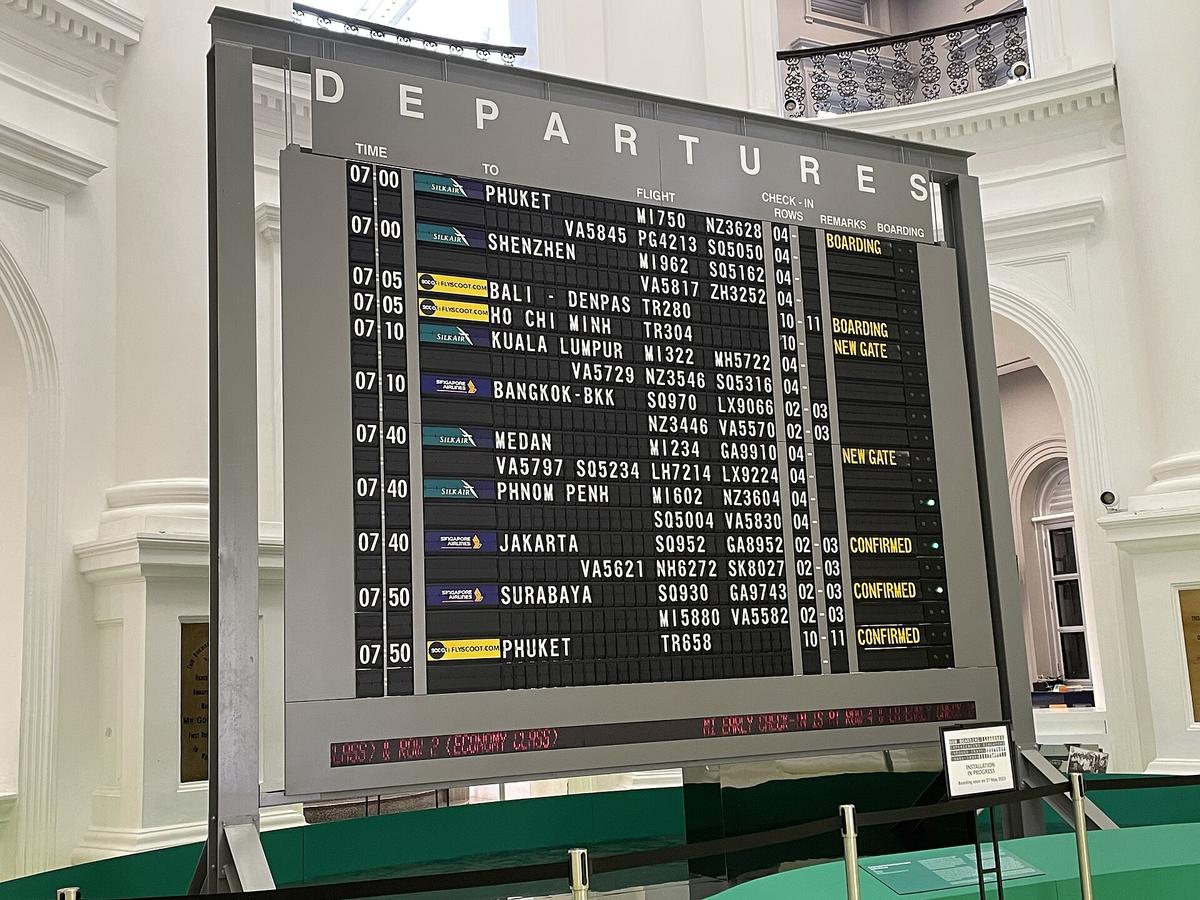

How Singapore school holiday dates set the fare calendar
The Ministry of Education publishes official term and holiday dates for MOE kindergartens, primary and secondary schools, and those dates act as the single strongest pricing signal for outbound flights from Changi. For 2026 the four holiday blocks are 14 March to 22 March, 30 May to 28 June, 5 September to 13 September, and 21 November to 31 December. In 2027 the blocks shift slightly to 13 March to 21 March, 29 May to 27 June, 4 September to 12 September, and 20 November to 31 December.
Two breaks dominate fare behaviour. The June window runs a full 30 days and the year-end window stretches 41 or 42 days. These are the periods when demand concentrates enough to rewrite the normal rules of airline pricing. The March and September breaks are shorter, nine days each, and while they produce a visible bump it is less sustained than the mid-year and end-of-year surges.
Because MOE announces dates for the following year by late August, the calendar is knowable well ahead of any booking decision. Checking the official academic calendar directly at moe.gov.sg before committing to a fare is the simplest way to avoid buying into a peak without realising it.
What happens to fares during the June and December breaks
Research comparing identical routes from Singapore shows that the fare multiplier during the June school holidays reaches 1.5x to 2.5x the annual baseline. The December school holidays push that range higher, to 2x to 3x. For context, Chinese New Year can hit 3.5x, but the school holiday windows are longer and affect far more travel days. A trip that might cost S$400 per person in an off-peak month can easily cross S$1,000 during the year-end break on the same route.
Changi Airport's passenger data makes the concentration visible. December 2025 was the busiest month on record with 6.3 million passenger movements, and 20 December 2025 was the single busiest day at over 223,000 passengers. That volume is not spread evenly across the month. It clusters around the first weekend after school ends and the days immediately before Christmas and New Year.
The practical takeaway is not that December travel is impossible to book affordably. It is that the definition of affordable shifts. A fare that looks high by February standards may be the best available price for a December departure, and waiting for a late drop is riskier than it would be in a quiet month.
When the lowest-fare windows actually open
Outside of school holidays, low-cost carrier fares from Changi follow a U-shaped curve. Prices bottom out roughly 3 to 8 weeks before departure for off-peak travel and then spike sharply in the final two weeks. That pattern does not hold during school holidays. For June and December departures the optimal advance booking window shifts to 10 to 14 weeks ahead, and for year-end travel specifically the lowest median fare appears when booking 8 to 14 weeks out.
This means a family targeting the June 2026 holidays should be watching fares seriously from late February or early March, not waiting until May. For the December 2026 break the sweet spot opens around late August to early October. Booking earlier than that can sometimes secure a reasonable fare, but the data suggests the deepest discounts do not appear a year in advance. Booking later, inside four weeks, almost guarantees paying a premium.
The advice that follows from this is straightforward. Set a price alert for your route at the start of the recommended window and be ready to book when the fare drops into a range you can accept. Do not expect the off-peak pattern of last-minute deals to repeat itself during school holidays.
Why departure day choice matters as much as booking date
The first and last days of each school holiday block are consistently the busiest and most expensive for departures. Flying midweek or even a day after the initial rush can reduce both cost and crowding. The same principle applies in reverse for return flights. Avoiding the Sunday evening crush at the end of a break often yields a lower fare.
Shifting travel outside school holiday and public-holiday-adjacent weeks can save S$150 to S$300 per ticket versus peak dates. That is a per-person figure, so for a family of four the difference can exceed S$1,000 on the same route and airline. The tradeoff is obvious. You may need to take children out of school for a day or two, or accept a shorter trip that fits entirely within the break but starts on a Tuesday instead of a Saturday.
Public holidays that overlap with or sit adjacent to school holidays amplify the effect. Chinese New Year, Hari Raya Puasa, Hari Raya Haji and Deepavali shift annually. When one of these falls inside or immediately next to a school holiday block, the combined demand pushes fares higher than the school holiday multiplier alone would suggest. Checking the Ministry of Manpower public holiday calendar for the target year before locking in dates is a sensible step that takes only a few minutes.
The months when fares drop below the annual average
Not every month carries a school holiday premium. February, May and October are the three months when no school holidays fall and fares drop to 0.6x to 0.8x of the annual average. These are the windows where the U-shaped LCC pricing curve still functions as expected and where booking 3 to 8 weeks ahead can find genuine bargains.
May is particularly interesting because it sits immediately before the June holiday surge. A family that can travel in late May rather than early June will often pay less than half the fare for the same destination. October offers a similar calm before the November-December peak. February benefits from being sandwiched between the Chinese New Year travel rush and the March school holiday break, though its exact attractiveness depends on where Chinese New Year falls in a given year.
These off-peak months are not a secret. Airlines know the calendar as well as travellers do. But the supply of seats in February, May and October typically outstrips the demand from travellers without school-aged children, which is what drives the lower multipliers.
How airlines respond to predictable demand surges
Airlines do not simply raise prices and leave capacity unchanged during school holidays. At Changi, carriers added over 600 supplementary flights for the 2026 Lunar New Year period, more than double the number added in 2025. While that specific figure relates to Chinese New Year, it illustrates a broader pattern. Airlines schedule extra sections and deploy larger aircraft during any predictable peak-demand window, including the June and December school holidays.
Extra capacity does not neutralise the fare increase. The multipliers of 1.5x to 3x persist because demand grows faster than the additional seats. But the supplementary flights do create more departure time options and occasionally open up lower fare buckets on less popular timings. A 2am departure on a supplementary flight may price lower than a 9am departure on a regular service, even if both operate on the same peak date.
The practical implication is that flexibility on departure time within a given date can surface meaningful savings, even during peak periods. Searching by whole month rather than by specific date on airline and comparison platforms is one way to spot these differences.
Building a fare strategy around the school calendar
A workable approach starts with the official MOE calendar. Confirm the exact holiday dates for your target year, then check the MOM public holiday list to see which observances fall inside or adjacent to those blocks. Mark the first and last days of each break as high-demand dates and look at midweek departures within the same window.
For June and December travel, begin monitoring fares 14 weeks before departure and aim to book between 8 and 14 weeks out. For March and September breaks the window is less extreme, but the same principle of early booking applies because the U-shaped LCC curve breaks down whenever school holidays are in play. For February, May and October travel the standard 3-to-8-week window remains relevant.
No single rule covers every route and airline. Fares on a popular short-haul LCC route to Bangkok behave differently from a long-haul full-service route to London. Checking live fares for your exact dates remains essential. But the structural pattern, the when of pricing rather than the exact dollar amount, is consistent enough to build a strategy around. The families who pay the lowest school holiday fares are generally those who book at the right time, fly on the right day, and treat the MOE calendar as the starting point of every trip plan.
Sources and verification
- moe.gov.sg — Research source checked for this guide
- moe.gov.sg — Research source checked for this guide
- shopback.sg — Research source checked for this guide
- airfares.com.sg — Research source checked for this guide
- channelnewsasia.com — Research source checked for this guide
- singaporewebzine.com — Research source checked for this guide
Read next
-

 Changi Airport Layover Hotels and Transit Accommodation Compared
A detailed comparison of every sleep option at Singapore Changi Airport, from airside transit hotels to the landside YOTELAIR in Jewel and the Crown Plaza.
-
 Staying Near Changi Airport and Whether It Is Worth It
A comparison of hotels near Singapore Changi Airport versus staying in the city, covering Katong, East Coast, and Changi Village for short stays and early departures.
-
 Singapore Flight Network, Carriers and Seasonal Route Guide
A complete overview of every airline and direct destination served from Singapore Changi Airport, from Singapore Airlines to budget carriers like Scoot and Jetstar Asia.
-
 A Long Layover at Changi Airport What Is Actually Worth Doing
A realistic guide to Singapore Changi Airport layovers, from terminal gardens and Jewel's indoor waterfall to the Free Singapore Tour and a quick city dash for laksa.
-
 Cheapest and Most Expensive Weeks to Fly From Singapore
A month-by-month breakdown of when flights from Singapore cost the most and least, driven by local school holidays, festivals, and seasonal demand patterns.
-
 Getting to Changi Airport and Moving Between Its Terminals
How to get from central Singapore to Changi Airport by MRT, ride-hail, or taxi, plus a full guide to moving between terminals and Jewel on the Skytrain or on foot.
-
 Johor Bahru or Changi for Regional Flights When the Detour Pays
A practical guide to Johor Bahru or Changi for Regional Flights When the Detour Pays.
-
 Singapore to Sapporo Flights: The Ski and Snow Route Direct in Season
When the direct Singapore–Sapporo flight operates for ski season, how to reach Niseko from New Chitose, and summer connection options via Tokyo.
-
 Singapore to Sydney Flights Compared Across Airlines and Stopover Options
Compare Singapore Airlines, Scoot, Qantas and British Airways on the Singapore to Sydney route, with advice on timing and stopover value.