Self Transfer Flights From Singapore How Much Connection Time You Need
A practical guide to Self Transfer Flights From Singapore How Much Connection Time You Need.
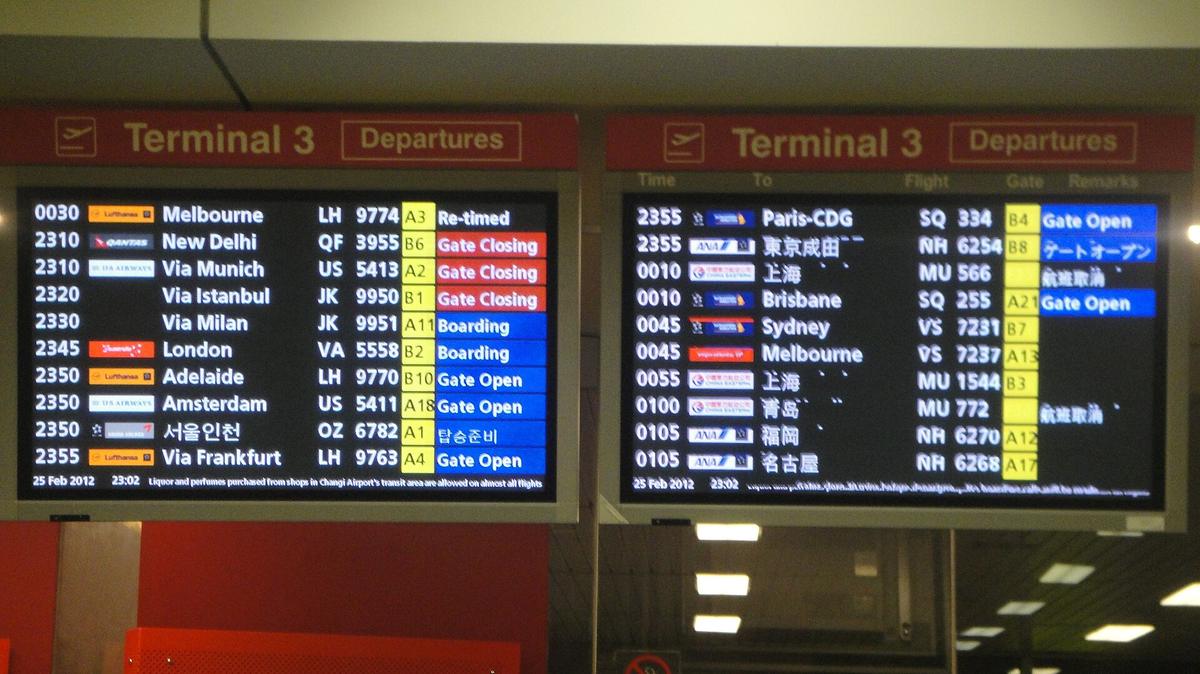

What a self-transfer flight really means at Changi
A self-transfer is not a standard connection. It means you hold two or more separately booked tickets, and the airlines involved have no obligation to help you if something goes wrong. At Singapore Changi Airport, this distinction carries specific legal and practical consequences that many travellers only discover after booking.
Under Singapore's Immigration and Checkpoints Authority rules, you are not considered a transit traveller when you need to clear arrival immigration to collect a boarding pass or baggage and check in again. Changi Airport's own transit guide confirms that transit eligibility requires both flights to sit inside a single booking itinerary with luggage tagged through to the final destination. Separate tickets do not qualify.
This means every self-transfer passenger must complete the full arrival and departure cycle: clear Singapore arrival immigration, collect any checked bags from the baggage hall, exit to the landside public area, travel to the departing terminal, check in at the airline counter, clear departure immigration, and pass through security screening. There is no airside shortcut available on separate tickets. The airlines have no responsibility to rebook you if you miss the onward flight, and Scoot's Conditions of Carriage explicitly state that the carrier accepts no responsibility for missed connections on separate itineraries.
The minimum time you should actually allow
The published IATA standard minimum connection time for international-to-international connections at Changi is 90 minutes, but that figure applies only to through-ticketed passengers who remain airside. It has no relevance to a self-transfer, where you must go landside and start again.
Independent travel analysts who have studied the self-transfer process at Changi recommend a minimum scheduled gap of 3.5 to 4 hours when you have checked bags and your journey involves a terminal change that includes Terminal 4. If you are travelling with hand luggage only and both flights operate from the same terminal, the recommended minimum drops to 2.5 to 3 hours. These are not official airport guarantees. They are practical benchmarks derived from the steps every self-transfer passenger must complete.
Your personal buffer should account for several fixed deadlines. Scoot check-in counters at Changi Terminal 1 close 60 minutes before scheduled departure, and passengers arriving after that deadline will not be accepted even if the aircraft is still at the gate. Check-in closure times vary by airline, so you must verify the exact deadline with your specific onward carrier before travel. A delayed inbound flight can consume your margin quickly, and on separate tickets no one owes you a later seat.
Terminal changes and why Terminal 4 matters
Changi's terminal layout adds a layer of complexity that many self-transfer passengers underestimate. The Skytrain connects Terminals 1, 2 and 3 on both the airside and landside, with a ride of approximately 5 minutes. Terminal 4 is a physically separate building with no Skytrain link. It is served only by shuttle buses.
The landside shuttle bus between T1 or T2 and Terminal 4 runs every 5 to 9 minutes from 06:00 to 00:00 and takes about 10 minutes. The airside transit shuttle runs approximately every 8 minutes and takes 10 to 18 minutes, with a 19-minute journey between T1 and T4. Since a self-transfer passenger must exit to landside, the landside shuttle is the relevant option. If your onward flight departs from Terminal 4 and you arrive at T1, T2 or T3, you need to factor in baggage collection, immigration clearance, the walk to the shuttle stop, the wait for the next bus, the ride itself, and then the check-in and departure formalities at T4.
Shuttle bus frequencies and journey times may vary by time of day and operational conditions. Confirm current timings on the Changi Airport website close to your travel date. If your self-transfer involves a late-night arrival and an early-morning departure, check whether the landside shuttle is running during the hours you will need it.
Entry requirements you cannot skip
Because a self-transfer at Changi requires you to clear Singapore arrival immigration, you must meet all Singapore entry requirements. This is not optional, and it applies even if you plan to be inside the airport for only an hour or two.
Passengers from visa-required countries, including India, Bangladesh, Pakistan, Nigeria and others listed by the Immigration and Checkpoints Authority, must hold a valid Singapore entry visa to complete a self-transfer. Without it, you will be denied boarding by your first airline or refused entry on arrival. Visa requirements depend on your passport nationality and are subject to change. You must verify your eligibility on the ICA website before booking a self-transfer.
All travellers entering Singapore, including self-transfer passengers who clear immigration, must submit the SG Arrival Card with electronic health declaration within three days before arrival. Those who remain airside without clearing immigration are exempt, but that exemption does not apply to you on separate tickets. The submission is done online, and failing to complete it can delay your progress through immigration at a moment when every minute counts.
How to decide if a self-transfer is worth the risk
The decision to book a self-transfer at Changi comes down to a trade-off between cost and certainty. Separately ticketed flights can be cheaper than a single through-ticketed itinerary, but the savings come with a hard set of obligations that shift entirely onto you.
If your inbound flight is late and you miss the onward check-in deadline, you will likely need to buy a new ticket at the last minute. If you have checked bags, you must collect them, which means you cannot simply rush from one gate to another. If your passport nationality requires a visa, you must secure it in advance. If your connection involves Terminal 4, you must budget extra time for the shuttle bus. These are not hypothetical risks. They are the documented, unavoidable steps of the self-transfer process at Changi.
One practical approach is to treat the recommended minimum gaps as a floor rather than a target. A 4-hour scheduled gap with checked bags and a T4 change leaves little room for a 90-minute inbound delay. A 6-hour gap gives you breathing space and access to Changi's landside amenities, including Jewel, while you wait. The right number depends on your risk tolerance, your budget for a replacement ticket, and whether your trip can absorb an unplanned overnight stay.
What to check with your airline before booking
Before you commit to a self-transfer itinerary through Changi, there are several details you must confirm directly with the operating airlines. Do not rely on third-party booking sites or forum advice for these points.
First, confirm the exact check-in counter closure time for your onward flight. Scoot closes its counters at T1 60 minutes before departure, but your airline's deadline may differ. Check the official website of the carrier operating your second flight and look for the check-in or before-you-fly page specific to Changi and your departure terminal. Second, verify the departure terminal for your onward flight. Airlines can and do move terminals, and a last-minute change from T1 to T4 can add significant transit time. Third, if you hold a passport from a visa-required country, confirm your visa eligibility on the ICA website before booking. An expired or absent visa will stop your journey at the first check-in counter.
These checks take minutes and cost nothing, but skipping them can turn a cheap self-transfer into an expensive mistake.
Sources and verification
- ica.gov.sg — Research source checked for this guide
- changiairport.com — Research source checked for this guide
- cdn.flyscoot.com — Research source checked for this guide
- changiairport.com — Research source checked for this guide
- ica.gov.sg — Research source checked for this guide
- ica.gov.sg — Research source checked for this guide
Read next
-

 Changi Airport Layover Hotels and Transit Accommodation Compared
A detailed comparison of every sleep option at Singapore Changi Airport, from airside transit hotels to the landside YOTELAIR in Jewel and the Crown Plaza.
-
 Staying Near Changi Airport and Whether It Is Worth It
A comparison of hotels near Singapore Changi Airport versus staying in the city, covering Katong, East Coast, and Changi Village for short stays and early departures.
-
 Singapore Flight Network, Carriers and Seasonal Route Guide
A complete overview of every airline and direct destination served from Singapore Changi Airport, from Singapore Airlines to budget carriers like Scoot and Jetstar Asia.
-
 A Long Layover at Changi Airport What Is Actually Worth Doing
A realistic guide to Singapore Changi Airport layovers, from terminal gardens and Jewel's indoor waterfall to the Free Singapore Tour and a quick city dash for laksa.
-
 Cheapest and Most Expensive Weeks to Fly From Singapore
A month-by-month breakdown of when flights from Singapore cost the most and least, driven by local school holidays, festivals, and seasonal demand patterns.
-
 Getting to Changi Airport and Moving Between Its Terminals
How to get from central Singapore to Changi Airport by MRT, ride-hail, or taxi, plus a full guide to moving between terminals and Jewel on the Skytrain or on foot.
-
 Singapore School Holiday Airfares When Prices Usually Move
A practical guide to Singapore School Holiday Airfares When Prices Usually Move.
-
 Johor Bahru or Changi for Regional Flights When the Detour Pays
A practical guide to Johor Bahru or Changi for Regional Flights When the Detour Pays.
-
 Singapore to Sapporo Flights: The Ski and Snow Route Direct in Season
When the direct Singapore–Sapporo flight operates for ski season, how to reach Niseko from New Chitose, and summer connection options via Tokyo.